Introduction
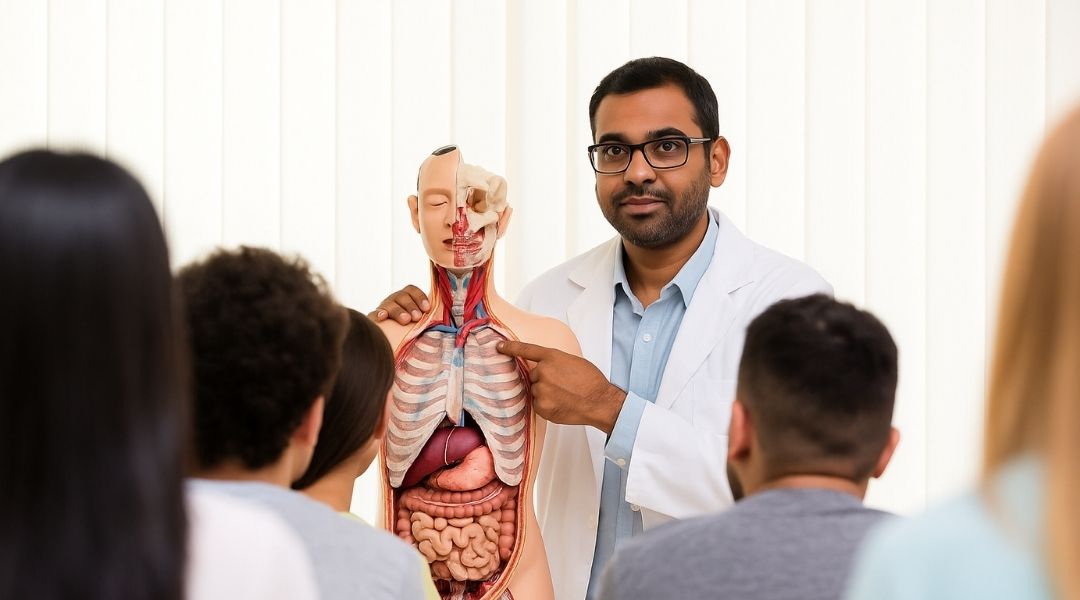
Behind every skilled healthcare professional is a teacher who guided them through the journey of learning. But even the most experienced educators need the right teaching aids to deliver impactful lessons. From CPR manikins to anatomical models, these tools not only help students understand better—they also boost their confidence to perform real-life procedures.
The Educator’s Challenge
Medical and nursing educators often face:
Large classrooms with diverse learning speeds.
Students struggling to visualize anatomy and procedures from theory alone.
Limited opportunities for students to practice before entering hospital wards.
This is where teaching aids transform the classroom into a skill-based learning space.
How Teaching Aids Build Student Confidence
Bridging Theory and Practice
Models and charts simplify complex concepts that textbooks cannot fully explain.
Students gain clarity faster, reducing anxiety about exams and practicals.
Hands-On Experience
CPR manikins, IV arms, and delivery simulators allow safe practice.
Repeated practice builds muscle memory, making students more confident in real scenarios.
Encouraging Active Learning
Instead of passive note-taking, students actively engage with models.
Participation leads to better retention and higher confidence.
Reducing Fear of Mistakes
Students can practice as many times as needed without risking patient safety.
Educators can correct errors early in the lab instead of in the hospital.
Standardized Training
With models, every student gets the same exposure to procedures.
Confidence grows when students know they’ve met global benchmarks of training.
A Case in Point
In a nursing college that adopted simulation-based learning, faculty reported:
A 40% increase in student participation.
Higher pass rates in practical exams.
Students showing greater willingness to handle patients during internships.
The Young Brothers Role
Since 1980, Young Brothers has supported educators with:
CPR & First Aid Manikins for emergency response training.
Nursing Skill Models for IV insertion, catheterization, injections, and wound care.
Gynecology & Pediatric Simulators for specialized training.
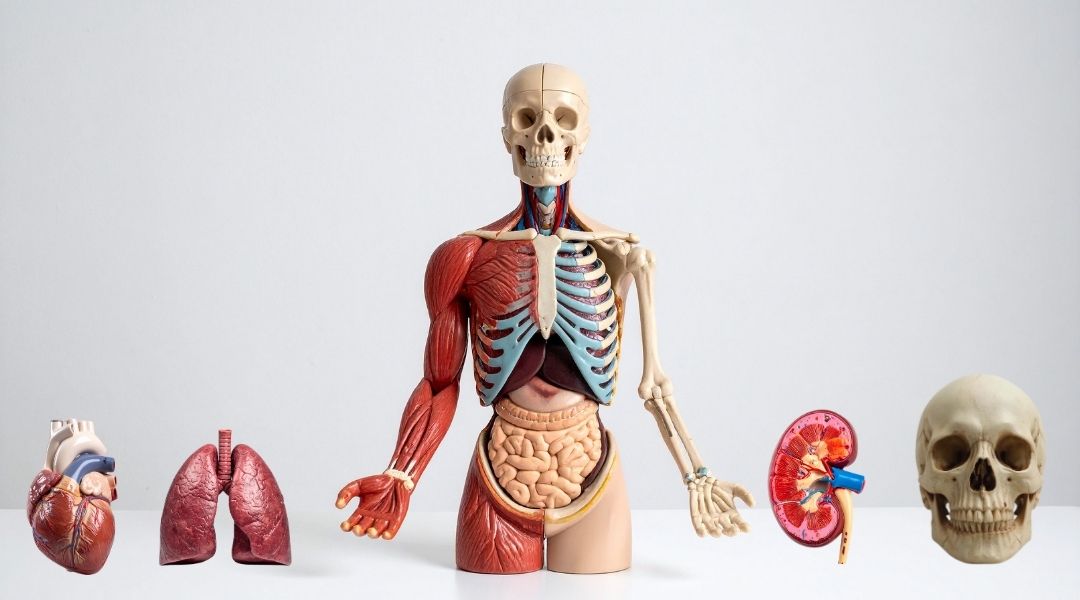
Charts & Anatomical Models for strong conceptual foundations.
By equipping educators with durable and accurate tools, we help them shape confident, skilled healthcare professionals.
Conclusion
Educators inspire, but teaching aids empower. With the right combination of models, manikins, and charts, students transition from hesitant learners to confident caregivers—ready to serve patients with skill and assurance.